
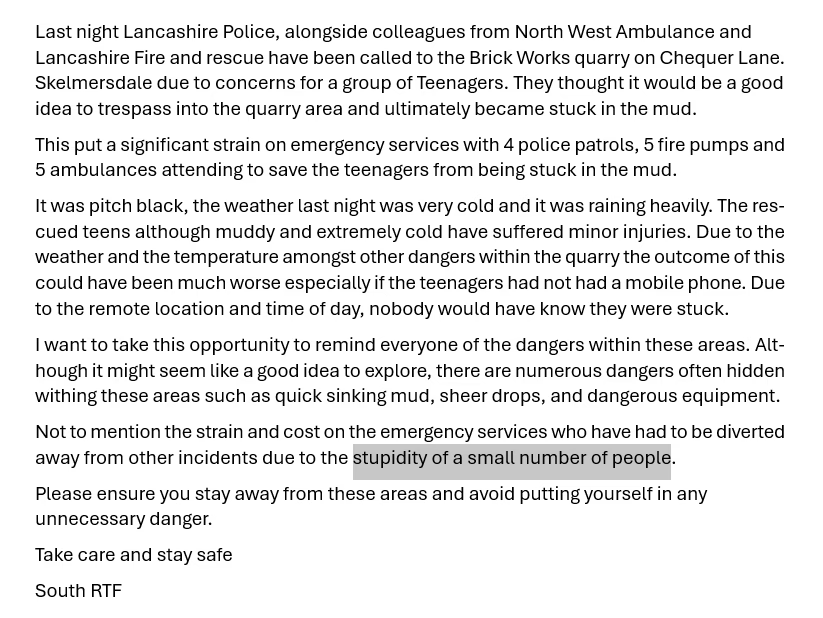
Public safety messaging only works when the messenger shows judgment, restraint, and professionalism. Unfortunately, a recently circulated email by Lancashire Police concerning teenagers rescued from a quarry in Skelmersdale failed on that basic test.
Facts Delivered, Then Undermined
The message set out the dangers clearly. It described heavy rain, darkness, cold temperatures, and hazardous terrain. Those details were relevant. They justified the warning.
Then came the failure.
By blaming “the stupidity of a small number of people,” the author turned a legitimate safety reminder into a lapse of professional judgment. At that point, the message stopped protecting the public and started exposing the police as judgmental.
Authority Requires Better Thinking
Police officers write in an official capacity. Their words carry weight. That means frustration must never override judgment.
Teenagers made a poor decision. That happens. It is expected. Emergency services exist because people misjudge risk. The surprising misjudgement here was not the trespass into the quarry. It was the decision to add a gratuitous insult to an official communication.
If good judgment is the aim of policing, this email demonstrated the opposite.
Safeguarding Was Forgotten
The individuals rescued were children. They were cold, injured, and vulnerable. Safeguarding principles apply regardless of embarrassment or inconvenience caused to responders.
Publicly characterising rescued teenagers as “stupid” does nothing to improve safety. Instead, it risks discouraging future calls for help. That consequence would be far more serious than the deployment of emergency resources.
Where is the stupidity?
The email accused others of stupidity, which is the exact tone the email itself sinks to. Insulting language in public communications damages trust. It invites scrutiny. It also shifts focus away from safety and onto police conduct.
Why an Apology Is Necessary
An apology would correct the imbalance. It would acknowledge that the wording showed poor judgment. It would also reaffirm that emergency services respond without moral judgment. Most importantly, it would demonstrate that professionalism applies as much to communications as it does to operations.
The public expects police officers to exercise judgment under pressure. When a message suggests that judgment failed, the responsible response is simple.
It is expected there will be no apology.
Be the first to comment