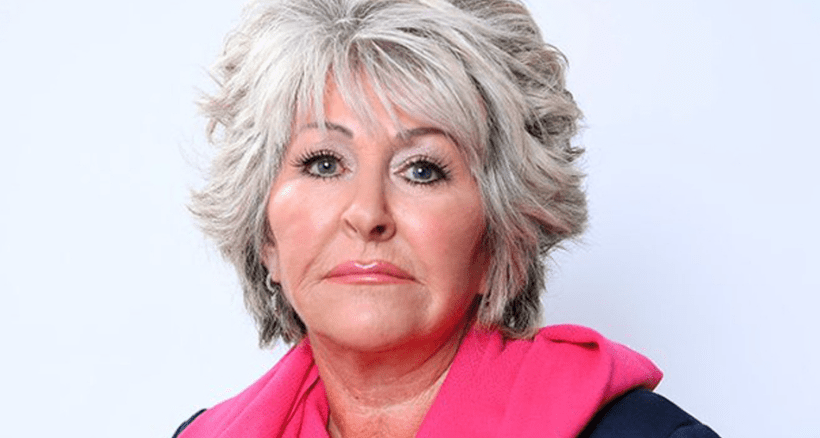
Maggie Oliver, a former police officer turned charity founder, has built a reputation for helping survivors of abuse. She purports to expose failures in the criminal justice system and claims to support victims through The Maggie Oliver Foundation (TMOF). However, recent events raise questions about her true commitment to victims.

Is Maggie Oliver genuinely helping those she claims to support, or is she still following the old police habits of protecting their own?
Maggie Oliver is still protecting Rick?
An email exchange with the UKCP website has cast doubt on Maggie Oliver’s commitment to transparency. In her reply, Maggie seemed to protect Rick Pendlebury, the former head of safeguarding of TMOF, even after his suspicious departure from the foundation.
Survivors and supporters have repeatedly expressed serious concerns about Rick’s past actions. He has connections with people who have intentionally harassed and harmed survivors. Instead of addressing these concerns openly, Maggie has tried to keep a lid on it.
Maggie Oliver confirmed Rick’s departure from TMOF, stating,
“Now that Rick is a free agent, he can do whatever he chooses to do.”
This statement feels dismissive, especially given the serious complaints against Rick. Why does Oliver hesitate to distance herself and the foundation from him? Is it loyalty, or is there more behind this protective stance?
Maggie also stated:
“As you know Rick has gone.
I’d like to say more but you will know too that I can’t.
But what Rick says or does is no longer anything at all to do with me, and for that I’m thankful.”
Maggie Oliver’s statements about Rick Pendlebury raise more questions than they answer. She acknowledges Rick is “gone” but offers no details about his departure. Her vague comment, “I’d like to say more but you will know too that I can’t,” suggests she is withholding important information.
This lack of transparency is concerning, especially given the serious complaints against Rick. She distances herself by saying Rick’s actions “no longer have anything to do with me,” yet provides no reassurance that survivors’ concerns will be addressed. Instead of clarity, Oliver’s response leaves a cloud of uncertainty and raises doubts about her commitment to accountability and protecting those she claims to serve.
In her email, Maggie further downplayed the gravity of TMOF’s handling of sensitive issues, stating,
“Mistakes have been made. But that’s life, and we live and learn and many lessons are very tough and very painful. But we grow through them and in a way we become stronger.”
To survivors who trusted TMOF, these are not just “mistakes.” For them, these are profound breaches of trust and safety. Maggie’s attempt to frame these as learning experiences minimizes the real harm done to those who sought help from her foundation.
Contradictory Safeguarding Policy
TMOF has recently published a new safeguarding policy (v4) on their website. This identifies a new safeguarding officer who has hopefully been thoroughly vetted. While this policy emphasises protecting survivors and preventing abuse, it appears contradictory to the foundation’s recent actions. Maggie Oliver’s casual dismissal of data protection laws and her reluctance to publicly address serious complaints against Rick undermine the principles outlined in the policy. This inconsistency raises further questions about the foundation’s true commitment to safeguarding and transparency.
Ignoring Data Protection Laws
Another troubling aspect of Maggie Oliver’s response is her attitude towards data protection laws. She called Subject Access Requests (SARs) and General Data Protection Regulation (GDPR) requirements “all that shite” This dismissive tone is concerning, especially from someone leading a foundation handling sensitive survivor information.
Survivors trusted TMOF with their personal data. They deserve more than to have their concerns dismissed as “shite” These regulations are not just red tape—they protect personal information. Oliver seems more annoyed by the inconvenience of these laws than worried about potential data breaches and the foundation’s handling of Rick’s access to sensitive information.
Minimising Harm to Survivors
Maggie Oliver’s comments about mistakes and learning seem to downplay the real harm caused by TMOF’s actions. She talks about learning from mistakes, as if the harm done to survivors is a small issue—a part of the foundation’s learning curve. But these aren’t just mistakes. Survivors are re-traumatized, and there are serious breaches of trust.
Maggie Oliver has also refused to issue a public announcement about Rick’s departure and the serious complaints against TMOF. If she is committed to helping victims, why not address these issues openly? Why not take a public stance to reassure survivors and the public that the foundation is committed to making things right?
Claims of Helping Victims, but Where Are the Morals?
Maggie Oliver claims she wants to help victims. Yet, her recent actions suggest she lacks moral clarity when it comes to victims harmed by her own foundation. By protecting Rick, dismissing the importance of data protection laws, and refusing to fully acknowledge TMOF’s failings, Oliver seems more focused on the foundation’s image than on supporting the survivors.
This raises the question: Has Maggie Oliver truly left her role as a police officer behind? Or does she still operate under the same principles, protecting her own even at the expense of victims?
Survivors come to TMOF believing in its mission. They deserve leadership dedicated to their cause and willing to confront difficult truths. It’s time for Maggie Oliver to decide if she’s a real advocate for victims or if she’s still, deep down, a cop at heart—once a cop, always a cop.
She’s not as helpful as she makes out. Her charity website is for very basic information. Numerous women have also been blocked on X for speaking out against the terrible support they’ve received through her charity
Sexual harassment on Victims and sexually assaulting a victim at an event. I volunteered at the foundation untill I realised how poorly ran it is nobody has had training.
I agree. Once individuals have been in the police, they can not be trusted. Policing is an institution that thrives on lies and abuse, and anyone who makes a career in that environment is of that mindset. St Maggie has showboated a lot on grooming gangs for media coverage, but a visit to the organisation’s website shows little other than signposting options to questionnable law firms and some inhouse ropey counselling service that may or may not be doing more harm than good. I believe Maggie to be an intelligent woman who speaks well on the topic of grooming, but I also see a lot of narcissism to her as she loves the spotlight, those bizarre balls, and I suspect has very little hands-on input in the actual organisation. I also question the fact that many journalists circle the organisation to exploit grooming gang victims and seem to be in turn grooming those victims for their own career/broadcast gain.