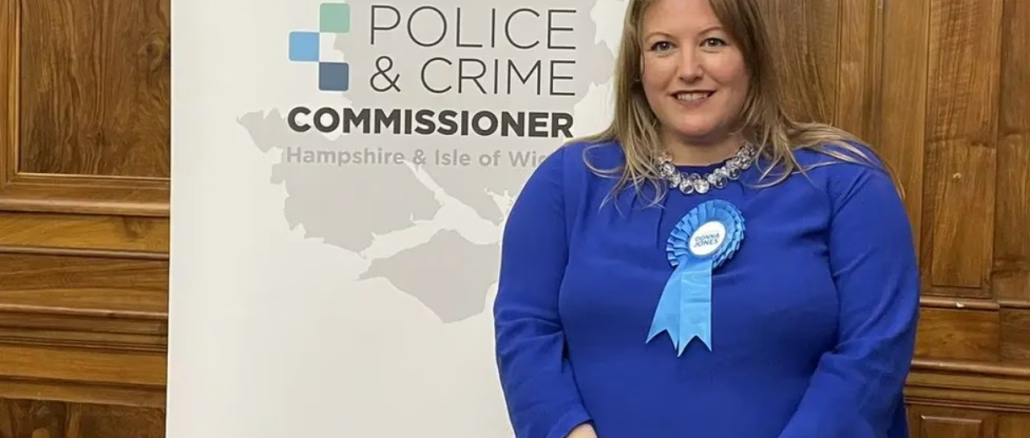
The sudden retirement of Hampshire and Isle of Wight Constabulary’s Chief Constable Scott Chilton, triggered by an investigation into undisclosed workplace relationships, shines a damning light on the failures of Police and Crime Commissioner (PCC) Donna Jones and the broader PCC system. Jones’s actions, or lack thereof, in this saga bolster the case that PCCs are a costly drain on taxpayers’ money, often biased and accused of shielding chief constables rather than holding them to account.
Chilton quit the moment the Independent Office for Police Conduct (IOPC) notified him of a probe into allegations he failed to declare relationships that posed conflicts of interest, one before and one during his time as chief constable. Jones, whose job is to scrutinise the force and ensure its leaders act with integrity, didn’t push for answers. Instead, when the claims first surfaced in February, she publicly backed Chilton, insisting he had her “full support” to keep leading the force. Her quick defence, before any investigation had even begun, raises questions about her impartiality and willingness to challenge those in power.
PCCs like Jones cost taxpayers millions, with Hampshire’s PCC office burning through over £1.4 million in 2023/24 alone. For that price, the public expects robust oversight, not blind loyalty to a chief constable. Yet Jones only referred Chilton’s case to the IOPC after a former officer, himself disgraced, forced the issue. Even then, her referrals came late, on 27 February and 31 March, suggesting she acted only when cornered, not out of a commitment to transparency. When Chilton retired, Jones didn’t demand accountability, she simply accepted his departure and named an acting replacement, leaving taxpayers to fund an IOPC investigation that may never deliver results.
Jones’s track record fuels accusations that PCCs are biased and too cosy with the chiefs they’re meant to oversee. Her initial rush to defend Chilton, despite serious allegations, fits a pattern critics point to across England and Wales, where PCCs are often seen protecting senior officers rather than probing their conduct. This isn’t just about one case, Jones’s reluctance to act decisively mirrors complaints that PCCs prioritise political image over public interest, happy to let chief constables dodge scrutiny while claiming to represent the people.
The PCC system, sold as a way to make police answer to communities, is looking more like an expensive middleman. Jones’s office, with its hefty budget, duplicates work already done by bodies like the IOPC, which is now left picking up the pieces of Chilton’s exit. Taxpayers foot the bill for her staff, her publicity, and an investigation that might fizzle out because Jones didn’t hold Chilton to account when it mattered. Meanwhile, the public gets a disrupted force and no real answers.
With budgets tight, spending millions on PCCs like Jones, who seem more inclined to shield chiefs than challenge them, feels like a betrayal. Chilton’s case, mishandled by a PCC accused of bias and inaction, shows why the system isn’t working. Taxpayers deserve oversight that delivers, not a costly setup that lets chief constables slip away while Jones stands by.
Why am I not surprised.
PCC role is not fit for purpose and needs to be abolished.