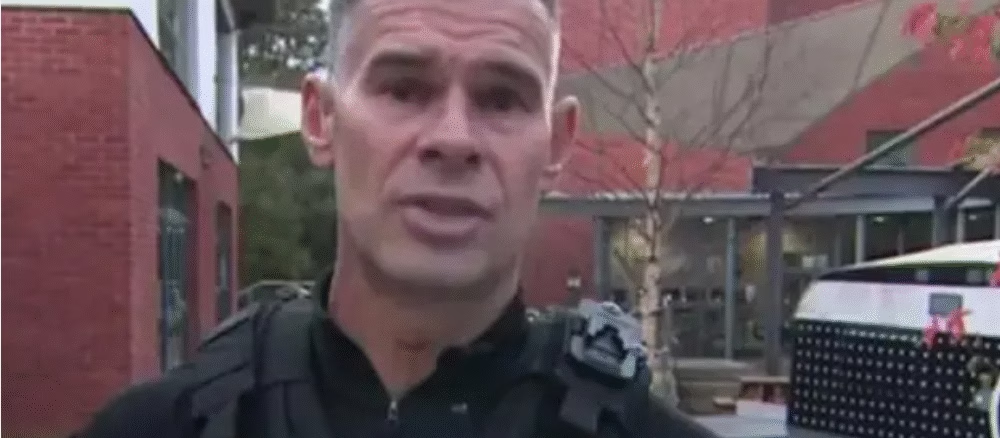
Dr Rebecca Tidy, a Cornwall-based journalist known for her incisive reporting on criminal justice, finds herself in the crosshairs of Devon and Cornwall Police. The force has requested she attend a “voluntary interview” under caution, alleging she harassed retired officer Harry Tangye through her posts on X. This move, ostensibly about protecting a former colleague, reeks of a deeper agenda: silencing a journalist who dares to scrutinise police conduct. The irony is palpable, as Tangye himself faces charges of stalking and harassment, yet the police appear more concerned with Tidy’s tweets than his alleged crimes.
Tidy’s posts on X, spanning 2023 to 2024, document her concerns about Tangye’s behaviour, including claims he sent hate mail to her home and misrepresented court outcomes. She also highlighted his charges, reported by Devon Live, and noted his past professional ties to another officer involved in a criminal trial. These posts are measured, factual, and rooted in her role as a journalist holding power to account. Yet, Devon and Cornwall Police have chosen to investigate her for harassment, a decision that raises serious questions about their priorities and motives.
The force’s actions fit a troubling pattern. Tidy has previously reported being targeted by police, including pressure to disclose phone passcodes during an interview, which she believes was an attempt to access her journalistic sources. Her posts on X suggest the police are retaliating for her coverage of Tangye’s case, with one stating,
If you rattle the wrong cage in British policing, you become the story.
This sentiment is echoed by her claim that the investigation is a “misuse of harassment law to silence scrutiny.” The timing is telling: a force under special measures for failing to investigate crimes against vulnerable women is now targeting a female journalist who exposed a retired officer’s alleged misconduct.
Devon and Cornwall Police’s decision to pursue Tidy while Tangye’s harassment case proceeds is not just misguided, it’s a chilling message to legitimate journalists. The force appears to be leveraging its authority to protect a former officer, even one accused of serious. Tangye, a retired firearms sergeant, was charged with non-violent harassment for allegedly sending discrediting emails to a woman’s employer between August and September 2024. Yet, instead of focusing on these allegations, the police are scrutinising Tidy’s online commentary, which merely reflects public interest in a high-profile case.
This case exposes a broader issue: the misuse of police powers to intimidate those who challenge institutional failings. Tidy’s journalism has consistently highlighted systemic issues within policing, from aggressive tactics to cultural rot. Her 2022 Huck article detailed how anonymous police accounts on X orchestrate pile-ons against critics, with Devon and Cornwall Police dismissing her reports of abuse. Now, by framing her posts as harassment, the force is attempting to flip the narrative, casting her as the aggressor. This tactic not only undermines press freedom but also diverts resources from addressing actual crimes.
The public deserves better. A police force should prioritise protecting the public, not policing legitimate speech that discomforts its former ranks. Devon and Cornwall Police must drop this baseless investigation and address the real issues at hand, starting with the allegations against Tangye. Anything less is an affront to justice and a betrayal of public trust.
Be the first to comment